
Brain Puzzle: Tricky Quest
JoyGame StudioPuzzle
4.61.12K Reviews
- Version
- 1.5.2
- Installs
- 50.00M
- Age Rating
- Teen
Screenshots



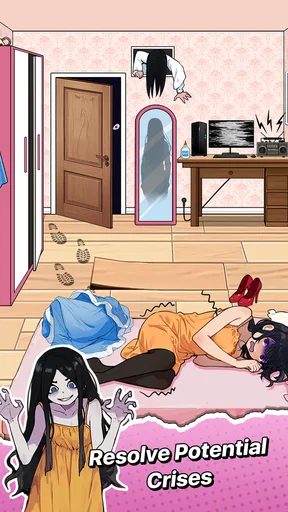
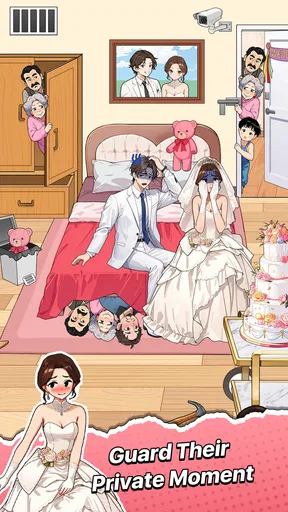



Our Review of Brain Puzzle: Tricky Quest
 Analysis by Appyee
Brain Puzzle: Tricky Quest is the kind of puzzle game I open when I want something light, quick, and slightly mischievous rather than a long strategy session. Its central appeal is simple: each challenge asks me to look at a situation differently, question the obvious answer, and solve a brain teaser through observation or lateral thinking. That makes it easy to start, but the better moments come when I stop treating each screen like a normal puzzle and begin testing what the game is actually asking me to notice.
Developed by JoyGame Studio, this free puzzle game is aimed at players who enjoy short brain games they can pick up during a break. It carries a Teen content rating and runs on Android 6.0 or later, so it is accessible on a broad range of devices. The current version is 1.5.2. Its popularity is also substantial, with more than 50 million installs and a 4.6 average from around 223 thousand ratings, alongside roughly 1.1 thousand written reviews. Those figures suggest that the format has found a large audience, but they do not replace the more important question: does the actual puzzle flow suit the way you like to play?
My first impression: quick puzzles with a deliberately playful mood
My first impression was that Brain Puzzle: Tricky Quest wants to feel approachable before it feels demanding. The presentation is built around the idea of a friendly brain teaser rather than a serious examination. That choice matters because it lowers the pressure to perform. I can make a mistake, try an unusual interaction, and continue without feeling that I have entered a complicated system that needs to be mastered first.
The short description calls it “Brain Puzzle,” and that is a fair summary, but the experience is more specifically about interpreting visual situations. Instead of relying only on conventional matching, arithmetic, or word-based questions, the game encourages me to inspect the whole scene. The intended answer may depend on an overlooked object, an unexpected relationship between elements, or a reading of the instruction that is less literal than it first appears.
That design creates a useful early rhythm. I read the prompt, scan the screen, make an obvious attempt, and then reconsider when the result is not what I expected. The best puzzles make that change of perspective feel earned. I do not need a long tutorial to understand the basic interaction, yet I still get a small moment of discovery when the solution becomes clear.
There is also a trade-off in this approach. A puzzle based on trick wording or visual misdirection can be satisfying once the logic clicks, but it can feel arbitrary if the game gives too little indication of what kind of thinking it expects. Players who prefer transparent rules and carefully structured deduction may find some challenges less rewarding than a traditional logic puzzle. I enjoyed the surprise, although I would not choose this game when I want every answer to follow a clearly stated system.
What the visual language communicates
The art direction supports the game’s accessible personality. The scenes are designed to be read quickly, with the important elements presented as part of a compact visual problem rather than an expansive world that demands exploration. This keeps attention on the puzzle itself. I am not spending time learning a fictional history or navigating a large map; I am looking for the detail that changes the meaning of what I see.
That compact presentation gives the game a recognizable visual language. Objects are not merely decoration. In a tricky puzzle, an apparently ordinary item can become the key to the answer, so I learned to avoid dismissing anything too quickly. A useful habit is to scan from the instruction to the characters, then to the background and edges of the scene. The first pass tells me what the puzzle wants me to notice; the second asks what has been placed there for a different reason.
The setting is therefore less about building a continuous fictional location and more about creating a series of readable situations. Each scene has its own small context, and the mood comes from the playful tension between what appears to be happening and what the solution requires. That makes the visual presentation coherent even when the individual scenarios change.
I also appreciate that the visual style does not try to overwhelm the mechanic. A puzzle game can lose its identity when effects, characters, or elaborate backgrounds compete with the clue. Here, the scene generally works as a stage for the question. The result is not a richly atmospheric adventure in the usual sense, but it has a clear visual purpose: make the player curious enough to inspect, test, and rethink.
How to read a scene more effectively
My most useful adjustment was to stop tapping randomly as soon as a puzzle resisted me. Random interaction can occasionally reveal something, but it is a poor long-term method because it hides the reason a solution works. Instead, I first identify the verbs in the prompt. If the wording suggests finding, helping, moving, avoiding, or changing something, I treat that verb as a clue to the type of interaction the scene may expect.
A second technique is to compare the obvious target with everything around it. If a character seems to be the focus, I check whether the answer is actually connected to an object, a boundary, or a visual detail nearby. This is especially useful in trick puzzles because the most prominent element is often there to guide my first assumption, not to provide the final answer.
The third technique is to test one meaningful change at a time. I may move an object, tap a less obvious area, or examine the instruction again, but I avoid performing a series of unrelated actions without observing the result. That makes the game feel more like investigation and less like guessing. It also helps me remember the design logic when a later challenge uses a similar kind of misdirection.
Sound, pacing, and the feeling of a short session
The game’s pacing is one of its strongest practical qualities. Brain Puzzle: Tricky Quest is easy to fit into small gaps in the day because its structure encourages a sequence of compact challenges rather than a commitment to a long uninterrupted play session. I can play while waiting for an appointment, take a break between tasks, or solve a few puzzles before putting my phone away.
That short-session design affects the mood. The experience feels more like a collection of playful mental interruptions than a demanding campaign. I am not preparing for a major encounter or worrying about losing progress in a complicated level. The pressure is limited to the current question, which makes the game suitable for casual use and for players who enjoy a quick sense of completion.
The sound design contributes to that light tone rather than trying to turn every puzzle into a dramatic event. In a game built around visual interpretation, audio works best when it supports feedback and keeps the interaction lively without becoming the main attraction. The overall effect is a gentle rhythm: read, inspect, try, discover, and move on.
That rhythm also reveals a limitation. Players looking for a strong musical identity, a deep narrative atmosphere, or a world that develops through sound may find the presentation modest. The mood is coherent because the audio and pacing serve the puzzle format, not because they create a large cinematic experience. I see that as an intentional fit, but it means the game should not be judged as an adventure or story-driven title.
For a better everyday routine, I recommend playing with a clear stopping point in mind. Because the puzzles are easy to begin, it is tempting to continue simply because the next challenge is available. I found the experience more enjoyable when I treated it as a short reset rather than an endless background activity. If I was tired, I also gave myself permission to leave a puzzle unresolved and return later; a fresh look often worked better than increasingly impatient tapping.
Where the mechanics fit the mood
The mechanics and presentation generally support each other. The visual scenes invite curiosity, the short format keeps the consequences of failure low, and the trick-puzzle structure gives the playful mood a purpose. I am not just looking at a colorful screen; I am being encouraged to challenge my first interpretation of it.
This is where the game differs from more traditional puzzle alternatives. A classic match-style game usually teaches a repeatable pattern and rewards planning within stable rules. A conventional logic puzzle often gives me a defined set of conditions and asks me to eliminate possibilities. Brain Puzzle: Tricky Quest is more interested in surprise and reframing. It asks, “What assumption are you making?” as much as it asks, “What is the correct sequence of moves?”
That comparison helps clarify who will enjoy it. If you like lateral-thinking riddles, visual jokes, and puzzles that make you rethink the wording, this format can be a good fit. If you want steadily increasing mathematical difficulty, complex resource management, or a single puzzle system that becomes deeper through practice, another category of game will probably serve you better.
The mechanics also work well for mixed experience levels. Someone new to mobile puzzle games can understand the basic goal quickly, while an experienced player can focus on detecting the designer’s misdirection. However, accessibility does not mean every challenge will feel equally fair. The more a solution depends on noticing a tiny detail or interpreting a phrase unexpectedly, the more personal preference affects the experience. I enjoyed those moments when the clue was visible in hindsight, but I can understand why another player might prefer a hint system or clearer feedback.
A practical way to use the game is as a mental warm-up. Before work, I can solve a few puzzles to shift attention away from passive scrolling. During a break, it offers more engagement than watching another short video. It is also useful for players who want to practice patience with ambiguous problems: the real skill is often resisting the urge to accept the first interpretation.
Who should play it, and who should skip it
I would recommend Brain Puzzle: Tricky Quest to casual puzzle fans who want a free experience with a playful tone and short, self-contained challenges. It is especially suitable for someone who enjoys asking “What if?” and who does not mind that the solution may require an unconventional reading of the screen. The Teen rating is worth keeping in mind for families choosing games for younger players, even though the core appeal is still the brain-teasing format.
I would be more cautious about recommending it to players who dislike trial and error. If you expect every puzzle to communicate its rules in a formal and predictable way, the trick-oriented design may feel less like deduction and more like guessing. The same applies if your priority is a rich setting with recurring characters, an unfolding story, or a memorable soundtrack. The game creates a consistent playable mood, but its world exists mainly to frame each puzzle.
Device compatibility is straightforward for older Android hardware because the minimum requirement is Android 6.0. That makes it a practical option for people who do not use a recent phone. The free price also lowers the barrier to trying it, although I still suggest judging it by the style of puzzles rather than downloading it simply because it costs nothing. A free game that does not match your preferred kind of thinking will not become enjoyable through convenience alone.
My final view on the atmosphere and the playability
Brain Puzzle: Tricky Quest succeeds when its art direction, sound, and pacing stay focused on one goal: making each small scene feel like a question hiding in plain sight. The presentation is not trying to deliver a huge world. Instead, it creates a playful space where the screen itself becomes the clue, and where a change in perspective can be more important than a fast reaction.
In my experience, the strongest reason to keep it installed is the combination of low commitment and mental surprise. I can play for a few minutes, encounter a puzzle that challenges an assumption, and leave with the satisfying feeling that I noticed something I had initially ignored. The weaker side is that trick-based design can occasionally feel less systematic than traditional puzzle games, especially when I want a clear rule set or a more substantial sense of progression.
The game has a 4.6 average and a large audience of over 50 million installs, which fits my impression that its format is easy to approach. Still, popularity is not the deciding factor for me. I would choose it for relaxed, visual brain teasers and short sessions, not for deep logic training or narrative immersion.
My recommendation is simple: try it when you want a friendly puzzle break that rewards curiosity, but skip it if you need every challenge to behave like a formal logic exercise. For the right player, its coherent mood and compact scenes make ordinary downtime feel a little more observant and playful.
Verdict
Strengths of Brain Puzzle: Tricky Quest
- Simple controls make it easy to start playing immediately.
- Short levels are convenient for quick gaming sessions.
- Creative puzzles encourage lateral thinking and experimentation.
- Works well for casual players seeking light entertainment.
- Progressive challenges help maintain a steady sense of discovery.
Limitations of Brain Puzzle: Tricky Quest
- Some puzzles may rely on unexpected solutions rather than clear logic.
- Difficulty can vary noticeably between consecutive levels.
- Frequent ads may interrupt gameplay, especially between puzzles.
- Replay value is limited once the solutions are already known.
- The game may feel repetitive for players who prefer deeper challenges.
Other Releases by JoyGame Studio
View All
Brain Puzzle 3: Crazy Mind
Puzzle4.7

Brain Puzzle 2: Logic Twist
Puzzle4.7

Puzzle Time: Brainy Challenge
Puzzle4.9
Similar Picks in This Category
View All
Block Blast!
HungryStudio4.8

Braindom: Brain Games Test
Lahana Game Studio4.6

AMAZE!
CrazyLabs LTD4.6

Sudoku - Classic Sudoku Puzzle
Oakever Games4.7

Art Puzzle - Puzzle Games
Easybrain4.8

Amaze GO!
Oakever Games4.9
Frequently Asked Questions
What is Brain Puzzle: Tricky Quest, and how does the gameplay work?
Brain Puzzle: Tricky Quest is a casual puzzle game built around short, surprising challenges that test observation, logic, memory, and creative thinking. Instead of following obvious instructions, you often need to inspect the scene carefully, tap unusual objects, or interpret a level in an unexpected way. Each stage is designed for quick play, making it suitable for short breaks while still offering plenty of moments that can be genuinely tricky.
Is Brain Puzzle: Tricky Quest free to download and play?
The game can generally be downloaded without an upfront purchase, allowing you to try its puzzles before spending money. However, free versions of this type of game may include advertising, optional in-app purchases, or both. Ads can sometimes appear between levels, while purchases may provide hints or remove advertisements. Check the current store listing for the exact pricing, payment options, and any regional differences.
Does Brain Puzzle: Tricky Quest require an internet connection?
Many of the individual puzzles appear suited to offline play once the necessary game data has been installed, which is convenient when traveling or when mobile coverage is limited. Nevertheless, an internet connection may still be required for advertisements, analytics, updates, cloud-related features, or in-app purchases. For the most reliable experience, launch the game online first and confirm whether the levels you want to play remain available without a connection.
Are the puzzles suitable for children and all age groups?
The simple controls and colorful presentation make Brain Puzzle: Tricky Quest approachable for many players, including older children and adults. However, difficulty can vary, and some solutions rely on wordplay, visual assumptions, or deliberately misleading instructions that younger children may not understand without help. Parents should also review the app's age rating, advertising, privacy information, and purchase settings before allowing unsupervised play.
What should I do if I cannot solve a level in Brain Puzzle: Tricky Quest?
When a level seems impossible, avoid tapping randomly and first examine every object, character, label, and corner of the screen. Try interpreting the instruction literally, then consider whether the game is asking you to perform an unexpected action, such as dragging, swiping, holding, or interacting with something that looks unimportant. If the game offers hints, use them selectively because repeated hint use may involve advertisements or limited resources.
Play our best games!


